
The Power of Color Psychology in Marketing

Introduction Did you know that up to 90% of a consumer’s first impression of a brand is based on color alone? Imagine losing potential customers simply because your color scheme isn’t sending the right message. Choosing the wrong colors can quietly kill conversions, making your brand appear untrustworthy, cheap, or forgettable. At HashtagWeb, we help businesses leverage color psychology to create a lasting impression, boost conversions, and build credibility. Here’s how different colors impact consumer behavior—and how to pick the right palette for your brand. The Psychology Behind Colors in Branding Each color evokes a different psychological response, which is why global brands strategically use specific color schemes to reinforce their message. Here’s how colors influence emotions and brand perception: 1. Red: Energy, Urgency, and Passion 🔴 Used by: Coca-Cola, YouTube, Netflix🔴 Best for: Food brands, entertainment, sales promotions (triggers urgency)🔴 Psychology: Red stimulates appetite, increases heart rate, and creates a sense of excitement. 2. Blue: Trust, Security, and Dependability 🔵 Used by: Facebook, PayPal, IBM🔵 Best for: Finance, healthcare, tech brands (builds reliability and professionalism)🔵 Psychology: Blue conveys stability, reduces stress, and enhances customer trust. 3. Yellow: Optimism, Happiness, and Attention-Grabbing 🟡 Used by: McDonald’s, IKEA, Snapchat🟡 Best for: Brands that want to evoke warmth, positivity, and friendliness.🟡 Psychology: Stimulates positivity but can also trigger caution if overused. 4. Green: Growth, Health, and Sustainability 🟢 Used by: Whole Foods, Starbucks, Animal Planet🟢 Best for: Eco-friendly brands, organic products, wellness industries.🟢 Psychology: Symbolizes nature, wealth, and calmness. 5. Black: Luxury, Power, and Sophistication ⚫ Used by: Chanel, Apple, Nike⚫ Best for: High-end brands, fashion, and technology.⚫ Psychology: Evokes exclusivity, elegance, and boldness. 6. Orange: Creativity, Playfulness, and Enthusiasm 🟠 Used by: Fanta, Harley-Davidson, Nickelodeon🟠 Best for: Fun, energetic brands that want to stand out.🟠 Psychology: Encourages action and excitement without the urgency of red. How to Choose the Right Brand Colors When selecting a color scheme for your brand, consider:✅ Your Target Audience: Who are you trying to attract? Different demographics react to colors differently.✅ Your Brand’s Personality: What emotions do you want to evoke? A luxury brand won’t use bright, playful colors.✅ Your Industry Norms: Some colors are universally trusted in certain industries (e.g., blue for banking and healthcare). Case Study: How We Used Color Psychology to Boost Conversions A client in the e-commerce space was struggling with low engagement and high bounce rates. After analyzing their color scheme, we found that their branding lacked contrast and emotional impact, failing to capture attention. Here’s how we transformed their design: 📌 Before:• Weak, neutral tones that didn’t create a sense of urgency.• Low-contrast CTAs that blended into the background.• Inconsistent branding that failed to build trust. 🚀 Our Fix:• Stronger CTA buttons in red and orange to increase urgency.• A cohesive blue and white theme to build trust and reliability.• Subtle green accents to reinforce growth and sustainability. 📈 The result? A 32% increase in conversions within 60 days! FAQ: How Do I Choose the Right Brand Colors? Q: Can color alone really impact sales and engagement?A: Absolutely! Studies show that color influences brand recognition by 80% and directly affects purchasing decisions. The right color scheme can build trust, encourage action, and create an emotional connection with your audience. Q: Should I follow industry norms or stand out?A: It depends! Following industry norms builds instant trust (e.g., blue for finance). However, if you want to disrupt the market, choosing a bold, unexpected palette can set you apart. Conclusion Color isn’t just a design choice—it’s a strategic tool that influences emotions, actions, and brand perception. Choosing the right colors can mean the difference between a forgettable brand and one that stands out. 🎨 LIMITED OFFER: Get a Free Brand Color Audit Today! Let’s craft a high-impact color strategy that boosts trust, engagement, and conversions. Schedule a consultation now!
Website Before & After Transformation: How Design Impacts Success
Introduction Did you know that every second of page load delay can drop conversions by 7%? In today’s fast-paced digital world, a slow, outdated website isn’t just frustrating—it’s costing you money. A poorly designed website can lead to *high bounce rates, lost sales, and a damaged brand reputation. At HashtagWeb, we specialize in transforming underperforming websites into *high-converting, revenue-generating machines. Here’s how we helped a struggling e-commerce business turn things around. The Problem: Why Websites Fail Many businesses struggle with:• Slow load times (leading to high bounce rates)• Outdated designs that reduce credibility• Poor mobile responsiveness• Confusing navigation that frustrates users• Low conversion rates due to ineffective CTAs 📌 The Cost of Inaction: Every month without fixing your website could be costing you thousands in lost revenue. Case Study: A Website Transformation in Action Our client, a mid-sized fashion e-commerce store, had:✅ *5+ second load times, leading to a *72% bounce rate✅ Cluttered homepage, confusing users with no clear buying path✅ *Unoptimized checkout, resulting in *high cart abandonment and lost sales They told us, “We get traffic, but people just leave without buying. We’re losing thousands every month.” They needed a complete transformation—fast. The Solution: Our Website Redesign Strategy To fix these issues, our team implemented 5 key improvements: 1. Speed Optimization & Performance Enhancements 🚀 Reduced load times from 5.8s to 1.9s by optimizing images, minifying code, and implementing caching. 2. Modern, Mobile-First Design 📱 Created a fully responsive design, ensuring seamless browsing across all devices. 3. UX & Navigation Improvements 🧭 Simplified the navigation structure, making it easier for users to find products and checkout quickly. 4. High-Converting CTAs & Copy Optimization 🛒 *Redesigned product pages & checkout flow, leading to a *58% increase in conversions. 5. SEO & On-Page Enhancements 🔍 Optimized page structure, metadata, and internal linking to boost organic traffic. The Results: Before vs. After 📈 Bounce Rate: Decreased from 72% → 38%📈 Page Load Time: Improved from 5.8s → 1.9s📈 Conversion Rate: Increased by 58%📈 Organic Traffic: Up by 120% within 4 months FAQ: How Do I Know If My Website Needs a Redesign? Q: My website looks fine, but I’m not getting sales. What’s wrong?A: Design isn’t just about looks—it’s about performance and conversion. If users leave without taking action, your website may be too slow, hard to navigate, or missing key trust signals. Conclusion A well-designed website isn’t just about looking good—it’s about *functionality, speed, and user experience. Our transformations don’t just make websites prettier; they make them *profitable. 🚀 LIMITED OFFER: Get a Free Website Audit Today! Let’s optimize your site for higher conversions and more revenue. Schedule a consultation now!
Our UI/UX Process in 5 Steps to Higher Conversions
Introduction Did you know that *88% of users will never return to a website after a bad user experience? If your website isn’t designed for *ease of use and engagement, you’re losing customers fast. At HashtagWeb, we follow a structured 5-step UI/UX process that ensures our designs are not just visually appealing but optimized for conversions and user retention. Here’s how we transform frustrating websites into high-performing digital experiences. Step 1: Discovery & Research Before designing anything, we take the time to understand your business, users, and goals. This phase includes:• User Research: Identifying target audience needs and pain points.• Competitor Analysis: Studying industry leaders to find UX opportunities.• Brand & Business Goals: Ensuring our design aligns with your objectives. 📌 Example: For an e-commerce client, our research revealed that 65% of visitors abandoned carts due to a confusing checkout flow. This insight helped us redesign a simpler, higher-converting process. Step 2: Wireframing & Prototyping Once we have a clear direction, we create wireframes and prototypes to map out user journeys and functionality.• Wireframes: Low-fidelity blueprints that define structure and layout.• Prototypes: Interactive mockups to visualize user interactions before development.• User Flow Mapping: Ensuring intuitive navigation and user-friendly experiences. 📌 Why It Matters: A well-structured prototype prevents costly redesigns later and ensures alignment with your vision from the start. Step 3: Visual Design & Branding With the layout in place, we move to the aesthetic elements of UI/UX design.• Typography & Color Psychology: Ensuring readability and emotional impact.• UI Components & Design Systems: Creating reusable elements for consistency.• Responsive Design: Making sure the design works across all devices. 📌 Example: A SaaS client saw a 20% increase in engagement after we introduced a modern, minimalistic UI with improved contrast and spacing. Step 4: User Testing & Feedback Before launch, we conduct rigorous testing to refine the design.• A/B Testing: Comparing different UI versions to optimize performance.• Usability Testing: Collecting real-user feedback on functionality.• Accessibility Checks: Ensuring compliance with WCAG and inclusivity standards. 📌 Case Study: A fintech startup improved conversion rates by 30% after implementing user feedback that simplified their sign-up process. Step 5: Development Handoff & Optimization Once the UI/UX design is finalized, we ensure a smooth transition to development.• Design-to-Code Collaboration: Working with developers for pixel-perfect execution.• Performance Optimization: Ensuring lightweight UI elements for fast load times.• Post-Launch Monitoring: Tracking user engagement and making data-driven improvements. 📌 Client Testimonial: “After HashtagWeb redesigned our UI, our conversions jumped by 35%. The user flow is now seamless, and customers love the new experience!” – David L., CEO of an E-Commerce Brand FAQ: What’s the Biggest UX Mistake Businesses Make? Q: Why do most websites struggle with engagement?A: The biggest mistake is designing for aesthetics rather than functionality. Without proper user research, testing, and optimization, a website may look good but fail to convert visitors into customers. Conclusion A structured UI/UX design process leads to more engaging, high-performing websites. Whether you need a redesign or a brand-new website, we ensure every step is optimized for usability and business growth. 🚀 LIMITED OFFER: Get a Free UX Audit Today! Let’s optimize your website for higher conversions and user satisfaction. Schedule a call now!
Costly E-Commerce Mistakes & How to Fix Them Fast
Introduction The e-commerce industry is booming, with online sales projected to surpass $7 trillion by 2025. Yet, *many businesses struggle to turn website visitors into paying customers. One of our recent clients, an online fashion retailer, had thousands of site visits but suffered from *a 75% cart abandonment rate and slow page speeds, costing them sales. At HashtagWeb, we specialize in developing high-converting e-commerce websites that eliminate these pitfalls. This guide breaks down the most common e-commerce mistakes and how to fix them—fast. 1. Slow Website Speed A slow-loading website is the fastest way to lose customers. 53% of users abandon a site that takes longer than 3 seconds to load. How to Fix It: ✅ Compress images and enable lazy loading.✅ Minify CSS, JavaScript, and HTML.✅ Use a fast hosting provider and CDN. 📌 Case Study: A client’s site had a *5.2s load time, and after our optimizations, it dropped to **1.8s, leading to a *35% increase in sales. 2. Poor Mobile Optimization Over 60% of online shopping happens on mobile. A non-mobile-friendly site leads to frustration and lost sales. How to Fix It: ✅ Implement a mobile-first design with responsive layouts.✅ Ensure easy navigation and thumb-friendly buttons.✅ Optimize checkout for seamless mobile transactions. 3. Complicated Checkout Process A lengthy or confusing checkout can lead to cart abandonment rates exceeding 70%. How to Fix It: ✅ Reduce the number of steps to checkout.✅ Offer guest checkout alongside account creation.✅ Provide multiple secure payment options. 📌 Client Win: After simplifying checkout from 5 steps to 2, a client’s cart abandonment dropped by 40%. 4. Weak Product Descriptions & Images Customers rely on product visuals and descriptions to make purchasing decisions. Poor-quality images or vague descriptions lower trust and conversions. How to Fix It: ✅ Use high-resolution images with multiple angles.✅ Write compelling, SEO-friendly product descriptions.✅ Add customer reviews and FAQs for credibility. 📌 Example: We helped an electronics brand rewrite their product descriptions with *SEO-focused copy, resulting in a *22% boost in organic traffic. 5. Lack of Trust Signals Customers hesitate to buy from websites that lack trust-building elements. How to Fix It: ✅ Display security badges (SSL, payment protection).✅ Showcase customer testimonials and ratings.✅ Offer a clear return and refund policy. 📌 What Works: A furniture retailer added *a “100% Satisfaction Guarantee” badge, and their conversion rate improved by *18% in two months. 6. Ignoring SEO Best Practices If your website isn’t ranking, you’re losing potential traffic. How to Fix It: ✅ Optimize product pages with relevant keywords and meta tags.✅ Use structured data markup for better visibility in search results.✅ Focus on internal linking and high-quality content. 7. Poor Customer Support & Communication Slow responses or lack of support can drive customers away. How to Fix It: ✅ Implement live chat and AI chatbots for instant help.✅ Provide a detailed FAQ section.✅ Offer multiple contact options (email, phone, social media). 📌 Client Impact: A beauty brand added *24/7 live chat, leading to *32% more repeat purchases. FAQ: How Can I Reduce Cart Abandonment? Q: My customers add items to their cart but don’t complete checkout. What’s wrong?A: Checkout friction is a major issue. Reduce steps, add trust signals, and optimize for mobile. Need help? Contact Us. Conclusion Avoiding these common e-commerce mistakes can dramatically improve your sales and user experience. 🚀 LIMITED-TIME OFFER: Book a Free E-Commerce Audit Today! Let’s optimize your online store for higher conversions and more revenue. Contact Us
How We Improved a Website’s SEO with a Strategic Redesign
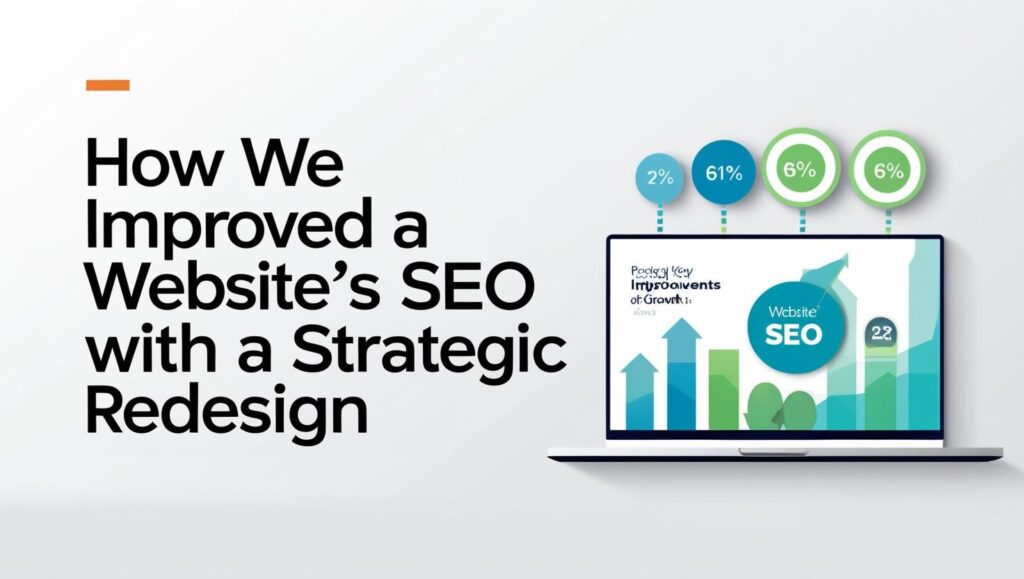
Introduction In today’s digital landscape, ranking on search engines can make or break a business. This case study explores how HashtagWeb helped a struggling e-commerce website increase organic traffic by 180% and improve user engagement through a comprehensive SEO-driven redesign. The Challenge Our client, a mid-sized e-commerce business, struggled with:• Poor keyword rankings (less than 5% of pages on Google’s first page)• Slow website speed (5+ seconds loading time)• High bounce rates (over 70% due to poor user experience)• Outdated design and navigation, causing low conversion rates They needed a development-focused solution that would improve their website’s structure, loading speed, and search visibility. Our SEO-Driven Redesign Strategy We approached the project with a website-first mindset, improving both the technical foundation and user experience. 1. Website Structure & Heading Hierarchy Fixes One of the biggest issues was the website’s poor heading structure (H1, H2, H3 tags), which confused search engines and harmed rankings. We:• Redesigned content layouts to ensure clear topic hierarchy• Properly implemented H1s for key pages, making content easier to index• Optimized internal linking to improve navigation and crawlability 2. Performance Optimization & Faster Load Times A slow website is an SEO killer. We optimized performance by:• Redesigning page layouts to remove unnecessary scripts and reduce clutter• Compressing images and enabling lazy loading, reducing load times by 62%• Implementing advanced caching & minified CSS/JS, improving Core Web Vitals 3. Modern UI/UX for Better Engagement The previous design was outdated, causing visitors to leave quickly. Our development team:• Created a mobile-first design, ensuring full responsiveness across devices• Simplified the checkout process, reducing cart abandonment by 30%• Enhanced visual hierarchy with better typography & spacing, making content more readable 4. On-Page SEO & Content Strategy With the technical and design fixes in place, we focused on content structure:• Updated product pages with optimized meta descriptions & keyword-rich content• Rewrote category pages to better target high-intent keywords• Developed a new blog strategy, improving organic discovery 5. Authority Building & SEO Trust Signals We also improved credibility signals to enhance domain authority:• Implemented schema markup for product listings and reviews• Secured backlinks from industry-relevant sources to improve trust• Refactored URL structures to be more SEO-friendly The Results: Measurable Growth in 6 Months After the redesign, our client saw significant improvements:• Organic Traffic Increased by 180% 📈 (Measured via Google Analytics & Search Console)• Bounce Rate Dropped from 70% to 40% due to better UI/UX• Page Load Speed Improved by 62% (Tested with Google Lighthouse)• First-Page Google Rankings Improved by 55%, with 30+ keywords moving up• Conversions Increased by 75%, proving the impact of a user-friendly design Conclusion SEO isn’t just about keywords—it’s about building a *technically sound, user-friendly website. By focusing on **site speed, structure, and UX, we helped this business *gain more visibility and increase conversions. 🚀 Want to see similar results? Get a Free Website Audit Today! Let’s optimize your website for both search engines and users.
The Importance of Mobile Optimization in 2025
Introduction Mobile usage is at an all-time high, with over 60% of web traffic coming from smartphones and tablets. As we step into 2025, businesses that fail to optimize their websites for mobile risk losing a significant portion of their audience. At HashtagWeb, we specialize in mobile-first development, ensuring that our clients’ websites are not just responsive but optimized for speed, usability, and conversions. Why Mobile Optimization Matters More Than Ever 1. Google’s Mobile-First Indexing Google now prioritizes the mobile version of a website for ranking. If your website isn’t optimized for mobile, it will struggle to rank well in search results, reducing visibility and traffic. 2. User Experience & Engagement A poor mobile experience leads to high bounce rates. Common issues include:• Text too small to read• Buttons too close together• Slow load times• Difficult navigation A mobile-optimized site improves usability, leading to longer session durations and higher conversions. 3. Faster Load Times = Higher Conversions Studies show that 53% of mobile users abandon a site that takes longer than 3 seconds to load. Our mobile optimization strategies include:• Image compression to reduce load time• Minified CSS & JavaScript to enhance performance• Lazy loading for better resource management 4. Mobile-Optimized Design & Development At HashtagWeb, we take a mobile-first approach to web development. Here’s how we ensure seamless mobile experiences:• Responsive layouts that adapt to any screen size• Thumb-friendly navigation for easy interaction• Mobile-first typography & spacing for readability 5. Increased Mobile Sales & E-Commerce Growth With mobile e-commerce sales projected to exceed $4.5 trillion in 2025, a seamless mobile experience is critical. Our team ensures that mobile checkout flows are frictionless, leading to fewer abandoned carts and increased revenue. Case Study: Mobile Optimization Success We recently helped an online retailer improve their mobile experience. After optimizing their site, they saw:• Page load time reduced from 5.2s to 1.8s• Mobile conversion rates increased by 64%• Bounce rate dropped by 35% Conclusion Mobile optimization is no longer optional—it’s essential. If your website isn’t delivering a seamless mobile experience, you’re losing customers. 🚀 Get a Free Mobile Audit Today! Let’s ensure your website is fast, user-friendly, and optimized for mobile success. Schedule a consultation now!
Why Every Business Needs a Website in 2025
In today’s digital world, having a website is no longer optional—it’s a necessity. As we step into 2025, businesses without a strong online presence risk falling behind. According to recent studies, *over 70% of consumers research a business online before making a purchase*. If your business isn’t visible, you’re losing potential customers. 1. Your Website is Your Digital Business Card Think of your website as your digital business card. When potential customers search for your business online, what do they find? Without a website, they might assume you’re not legitimate or trustworthy. A professional website gives you credibility and ensures customers can easily access important information about your products or services. 2. Online Presence is Non-Negotiable More people are using the internet to find businesses than ever before. With over 5 billion internet users globally, your potential audience is massive. If your business isn’t online, you’re missing out on countless opportunities to attract customers. 3. Increased Visibility and Reach With the right SEO strategies, a website helps you reach new customers beyond your local area. Whether you sell products, offer services, or provide information, a website ensures that people can find you when searching for relevant keywords on Google and other search engines. 4. A Website Works 24/7 Unlike a physical store with set operating hours, a website is available 24/7. Customers can browse your offerings, learn about your business, and even make purchases at any time of the day or night. This increases sales potential and customer convenience. 5. Essential for Branding and Credibility A well-designed website with consistent branding and professional content builds trust with potential customers. It allows you to showcase customer testimonials, case studies, and your company’s unique value proposition, making your business more credible and appealing. 6. E-Commerce is Thriving Online shopping is bigger than ever, with e-commerce sales projected to grow exponentially in 2025. If you sell products, having an e-commerce website allows you to reach customers globally, reducing dependency on physical store locations. 7. Marketing Without a Website is Ineffective Your website is the foundation of your digital marketing efforts. Whether you’re running social media ads, email campaigns, or SEO strategies, all roads lead back to your website. Without a website, your marketing efforts have nowhere to convert visitors into paying customers. 8. A Website Helps You Compete Your competitors likely have websites—and they’re attracting your potential customers. To stay competitive, you need a website that showcases your business’s strengths and gives visitors a reason to choose you over the competition. 9. Customer Convenience and Support A website can serve as a customer support hub, offering FAQs, chatbots, and contact forms. This improves customer satisfaction by providing answers and support without requiring a phone call or physical visit. 10. Data and Insights for Growth With tools like Google Analytics, your website provides valuable insights into customer behavior. You can track visitor demographics, popular pages, and conversion rates to refine your marketing strategy and optimize user experience. Conclusion In 2025, having a website is no longer just an advantage—it’s a requirement. From credibility to customer convenience, increased visibility, and marketing success, a website is the backbone of any business’s digital presence. If you don’t have a website yet, now is the time to invest in one. Request a Free Consultation
Key Mobile App Development Trends in 2024: Innovations Shaping the Future
As mobile technology continues to advance, staying updated on the latest trends in mobile app development is essential for businesses looking to enhance user experience and engagement. This article explores the key trends expected to shape the mobile app landscape in 2024 and provides insights into how these innovations can be leveraged to create successful applications. 1. 5G Technology: Enhancing Mobile Performance With the global rollout of 5G, mobile applications are set to experience significant improvements in performance. This next-generation technology offers faster speeds, reduced latency, and the ability to handle more simultaneous connections. Why It Matters: 5G enables developers to build applications that require real-time data processing, such as live streaming, AR, and VR experiences. According to a report by GSMA,5G connections are expected to reach 4.4 billion by 2027, making it crucial for app developers to optimize their products for this new standard【23†source】. 2. Augmented Reality (AR) and Virtual Reality (VR): Immersive Experiences AR and VR technologies are transforming how users interact with mobile applications. These technologies create immersive experiences that can enhance user engagement, particularly in sectors like retail and education. Why It Matters: AR applications allow users to visualize products in their environment before purchase, while VR can simulate environments for training or entertainment purposes. The AR market is projected to reach $97.76 billion by 2028, indicating a robust growth trajectory【24†source】. 3. AI-Powered Personalization: Tailoring User Experience Artificial Intelligence (AI) is becoming integral to mobile app development, enabling apps to analyze user behavior and preferences to offer personalized experiences. Why It Matters: Personalized content increases user retention and satisfaction. For example, Spotify and Netflix utilize AI algorithms to recommend content based on user preferences, leading to improved engagement. A survey from Epsilon found that 80% of consumers are more likely to engage with brands offering personalized experiences. 4. Blockchain for Enhanced Security Blockchain technology offers a decentralized and secure method for storing data, making it increasingly popular in mobile app development, especially in finance and healthcare. Why It Matters: By providing a tamper-proof system, blockchain enhances data security and user trust. A 2022 report by IBM highlights that blockchain can significantly reduce the risk of data breaches and improve transaction transparency . 5. Progressive Web Apps (PWAs): Combining Web and Mobile Benefits Progressive Web Apps are gaining traction as they offer an app-like experience directly through a web browser. PWAs can work offline, send push notifications, and have faster load times, making them more user-friendly. Why It Matters: PWAs are cost-effective and accessible, requiring no app installation while providing a smooth user experience. According to Google, businesses that adopt PWAs can see an increase in user engagement by up to 50% . 6. Emphasis on Privacy and Compliance As regulations around data privacy tighten, ensuring mobile apps comply with laws like GDPR and CCPA is more important than ever. Why It Matters: Implementing robust security measures not only protects user data but also builds trust. Research from the Ponemon Institute shows that the average cost of a data breach is $4.24 million, emphasizing the need for compliance and security in app development . Conclusion Understanding these mobile app development trends is crucial for developers and businesses aiming to create effective, engaging applications in 2024. From leveraging 5G for faster performance to integrating **AI** for personalized experiences, staying ahead of these innovations will empower businesses to meet user expectations and thrive in the competitive mobile landscape.
How AI Chatbots Can Reduce Customer Support Costs by 40% (Supported by Research)
Customer service is one of the largest expenses for scaling businesses, with McKinsey research showing that up to 15% of operating costs go toward customer service functions alone. As customer demands for faster response times grow, traditional support methods can struggle to keep pace leading to long response times, frustrated customers, and spiraling costs. AI chatbots have emerged as a powerful solution to these challenges, allowing companies to reduce costs while enhancing the customer experience. By integrating AI-powered chatbots, businesses can cut customer service costs by 40% or more, according to [Forrester Consulting](https://go.forrester.com/) . What Are AI Chatbots? AI chatbots are advanced virtual agents that mimic human conversations using natural language processing (NLP) and machine learning (ML). Unlike static FAQs or scripted responses, these chatbots learn from each interaction, becoming more effective at handling complex inquiries. The Real Cost of Customer Support Handling customer service manually is costly, and the expenses add up across various areas:Labor Costs: The average salary for a customer support representative in North America ranges from $35,000 to $50,000 annually.Training and Turnover: High turnover rates in support roles mean continuous spending on hiring, training, and onboarding.Infrastructure: Beyond salaries, businesses must invest in software, office space, and hardware to support teams—adding significantly to operational expenses. How AI Chatbots Drive Down Costs and Improve Service Implementing AI chatbots can drastically reduce these expenses while improving customer service quality. Here’s how: Labor Saving: AI chatbots handle up to 70% of routine customer interactions. With fewer repetitive tasks, human agents can focus on more complex issues, lowering staffing needs.24/7 Availability: Unlike humans, chatbots are available around the clock, reducing the need for night shifts or additional staff during peak hours.Faster Resolution Times: Customers receive immediate responses, which not only improves satisfaction but reduces the number of calls abandoned due to long wait times. A Case Study in Cost Reduction Research from [Forrester Consulting](https://go.forrester.com/blogs/how-chatbots-cut-customer-service-costs-by-40/) found that companies using AI-powered chatbots in customer service saw a 40% reduction in support costs within the first year of implementation. This cost reduction enabled businesses to allocate resources to growth-driving activities rather than operational expenses. Free Resource: Your Guide to Implementing AI Chatbots Ready to explore the benefits of AI chatbots? Download our comprehensive e-book on implementing AI chatbots to learn everything from cost-saving strategies to best practices for integration. What You Can Achieve with HashtagWeb’s AI Chatbots At HashtagWeb, we specialize in customized AI chatbot solutions, powered by Orimon, that integrate seamlessly with your existing customer service systems. With our expertise, your business can: – Improve customer satisfaction by offering 24/7 support.– Lower operating costs and free up valuable resources.– Transform the customer experience without sacrificing quality or increasing headcount.